Tribal Uses
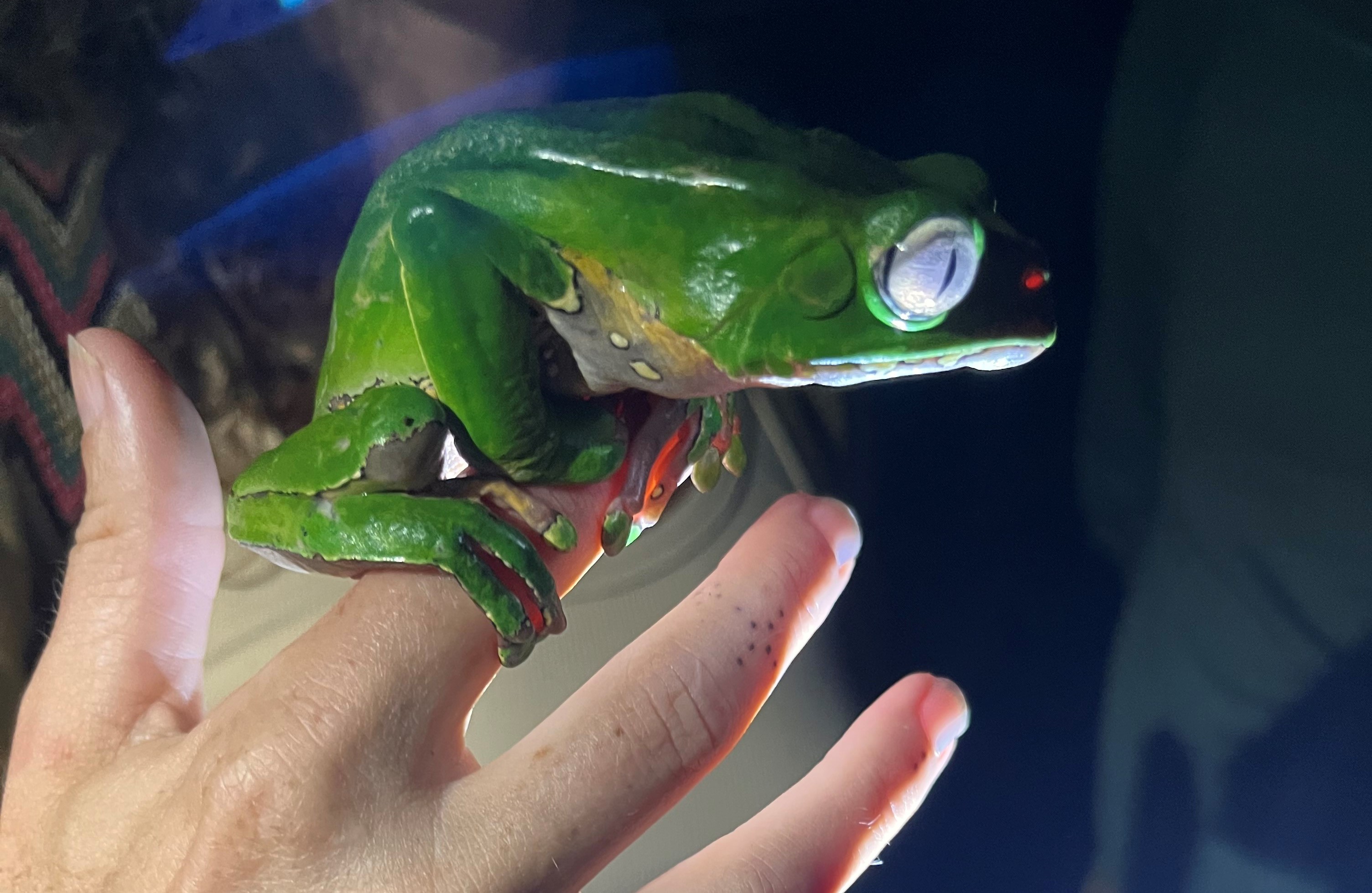
Kambo, the secretion of the giant waxy monkey frog (Phyllomedusa bicolor), has been used by some Amazonian tribes for centuries. These include the Matsés, Yawanawá, Huni Kuin, Amahuaca, Katukina, Kulina, and Marubo. Traditional practices vary by community, and the secretion is considered part of broader ceremonial and cultural contexts.
Kambo Application
Small, shallow points are created on the skin to allow Kambo to enter the body. Participants will drink water before the secretion is applied. The number of points and process is adapted for each individual, and first-time participants always begin with a test application to ensure comfort.
Sessions usually last about 20 minutes, though the total time together is longer to allow for preparation, rest, and reflection. Some participants may experience purging or other bodily responses. Kambo is not hallucinogenic or psychoactive, and experiences can vary.
Sananga
Sananga is a plant-based eye drop derived from Tabernaemontana undulata and is sometimes used prior to Kambo to support focus and presence. It serves a traditional role in Amazonian practices.
Hapé
Hapé is a jungle tobacco-based snuff, often mixed with other plants. When used, it is delivered via a pipe to the sinuses and is intended as part of a ceremonial or reflective practice. The blend I offer comes from a Brazilian family with generational experience in preparing hapé with intention.
Agua de Florida
Agua de Florida, a perfumed water with herbal and floral notes, has a history of use in some Indigenous ceremonies. It may be used for ritual or reflective purposes, often described as helping to clear space and promote a sense of focus.

Secretion Harvesting & Stewardship
Kambo secretion is ethically and sustainably collected. Frogs are located in the wild and gently handled to collect only a portion of their secretion, which helps the frog retain some of its natural defense until it can produce more. Frogs cannot be sustainably kept in captivity due to their dietary needs.
It is important not to purchase sticks or secretion from unknown or urban sources, as ethical and sustainable practices may not be followed.
Lymphatic Application
The points on the skin allow the secretion to interact with the body. People may experience responses such as sweating, tears, or nausea. Kambo should only be administered by someone trained and experienced in its traditional and safety-oriented methods.
Peptides
Kambo contains peptides, which are chains of amino acids. Peptides are naturally occurring molecules that act as signals within the body. In Kambo, these molecules are part of the secretion and have been studied in laboratory and academic contexts.
The Kambo secretion contains several identified peptides, including bradykinins, tachykinins, caerulein, sauvagine, tryptophyllins, dermorphins, and bombesins. Academic research is available for those who wish to explore these compounds further.
Note: This section is informational only. Kambo is not a substitute for medical care, and this information does not imply therapeutic outcomes.
 Kambo Herbalista